Watch video – Former astronaut Jay Buckey, a professor of medicine, is featured in a segment about being part of the team of researchers monitoring the health of astronauts on the Polaris Dawn mission that launched this week. “The worst case would be to have a kidney stone in space that doesn’t pass,” Buckey said. “So, it’s really important to just try and keep it from forming in the first place.”
Articles by: Geisel Communications
Dr. Glaucomflecken on Finding the Comedy in Medicine – New York Magazine: Intelligencer
Read article – A profile piece on TikTok’s Dr. Glaucomflecken—ophthalmologist Will Flanary, MED ’13. “I quickly realized that if I wanted to build an audience, I had to expand to other areas of medicine,” Flanary said.
Breast Density and Mammograms: New FDA Rule Will Ensure All Women Have More Information After Cancer Screenings – The Conversation
Read article – Christine M. Gunn, an assistant professor of the Dartmouth Institute, co-authors an opinion piece about the new FDA rule requiring mammography facilities to notify patients about their breast density. “While evidence is clear that regular mammograms save lives, additional testing such as ultrasound, MRI or contrast-enhanced mammography may be warranted for women with dense breasts,” Gunn writes.
The Healing Power of Music – The Pulse (Audio) – NPR
Read article – Barbara C. Jobst, the chair and a professor of neurology, is featured in a segment about the healing power and influence of music. “We need to be careful with such claims that it is treating epilepsy, when we have shown it reduces abnormal potentials in the brain,” Jobst said. “It doesn’t mean you have less seizures, it doesn’t mean it cures your epilepsy, it just means you have less of those abnormal potentials in the brain, and that’s probably good.”
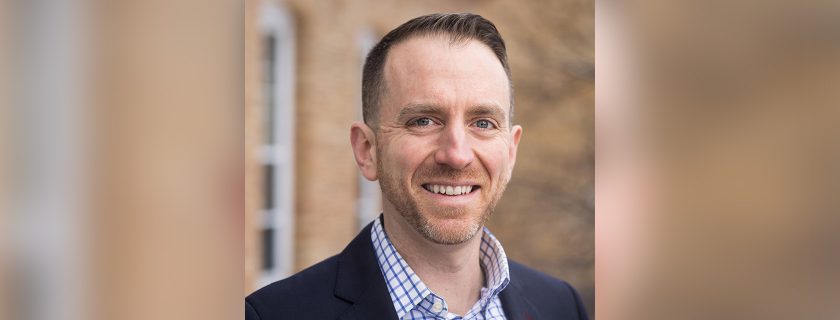
Andrew Rose Named Senior Associate Dean for Administration and Finance for the Geisel School of Medicine
Duane Compton, PhD, Dean of Dartmouth’s Geisel School of Medicine, has named Andrew Rose, MBA, as the school’s new Senior Associate Dean for Administration and Finance. The promotion is effective immediately. In his new role, Rose will oversee all administrative and operating requirements for the medical school.
How to Eat for a Long and Healthy Life – The New York Times
Read article – Susan B. Roberts, the senior associate dean of foundational research at the Geisel School of Medicine, is featured in an article about nutrition for a long and healthy life. Roberts emphasizes the importance of living in good health for as long as possible.
Why This Ivy’s Top-Ranked Business & Medical Schools Are Partnering on a New Master’s Degree – Poets&Quants
Read article – Katherine Milligan, associate dean for Dartmouth’s health care management education, is quoted in an article about Dartmouth’s new master of health administration. The new degree is a partnership between Geisel School of Medicine and Tuck School of Business. “There’s no one else in the country that partners the way that we’re partnered,” Milligan said.
No Appreciable Benefit for Cold Over Hot Snare EMR in Large-Polyp Resection – Gastroenterology & Endoscopy News
Read article – Heiko Pohl, a professor of medicine and The Dartmouth Institute, is featured in an article about his study into cold snare endoscopic mucosal resection for colorectal polyps.
Some Gulf of Maine Seafood Has PFAS. Your Local Freshwater Fish May Not Be Safe Either. – New Hampshire Bulletin
Read article – Megan Romano, an associate professor of epidemiology, and Celia Chen ’78, Guarini ’94, a research professor in the Department of Biological Sciences, are featured in an article about levels of PFAS in seafood. “It’s not just a human health problem,” Chen said. “It’s a wildlife problem, too.”
Vermont Health Insurance Costs Are Among the Highest tn the Nation—And Rising Quickly – VTDigger
Read article – Carrie Colla, a professor of the Dartmouth Institute, is quoted in an article about the rising cost of Vermont health insurance, already one of the highest in the nation. “As an economist, we think of it as p times q, price times quantity,” Colla said.