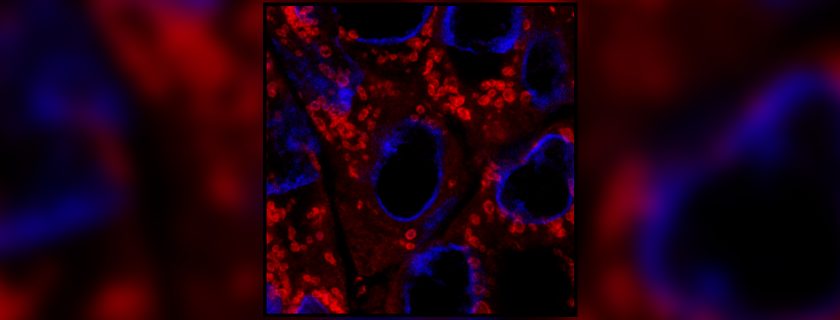
Dartmouth researchers have discovered that immune cells called macrophages play opposing roles in cancer, with some fighting tumors, while others help them grow. A study published in Nature Immunology points to a more precise approach to cancer treatment by selectively blocking the cells that suppress the body’s natural defenses, using a drug already approved by the FDA.
Post Tagged with: "cancer research"
Geisel School of Medicine Receives Grant to Support Interdisciplinary Collaboration with HBCU and HSI Institutions
The Geisel School of Medicine’s Office of Diversity, Inclusion, and Community Engagement (DICE) has been awarded a one-year grant to support the Alliance for Scholarship, Collaboration, Engagement, Networking, and Development (ASCEND), from Genentech, a member of the Roche Group, a pioneer in scientific breakthroughs dedicated to improving people’s lives.
Dartmouth Cancer Researcher P. Jack Hoopes Dies
Jack Hoopes, DVM, PhD, professor of surgery and radiation oncology at Geisel School of Medicine, and adjunct professor of engineering at Thayer School of Engineering, died on Sunday, August 10.
Researchers Find a New Therapeutic Target in Pancreatic Cancer
A new study uncovers how the most commonly mutated tumor suppressor gene in cancer and the most commonly mutated oncogene in cancer cooperate to drive formation of pancreatic cancer.
New AI Model Accurately Classifies Colorectal Polyps Using Slides From 24 Institutions
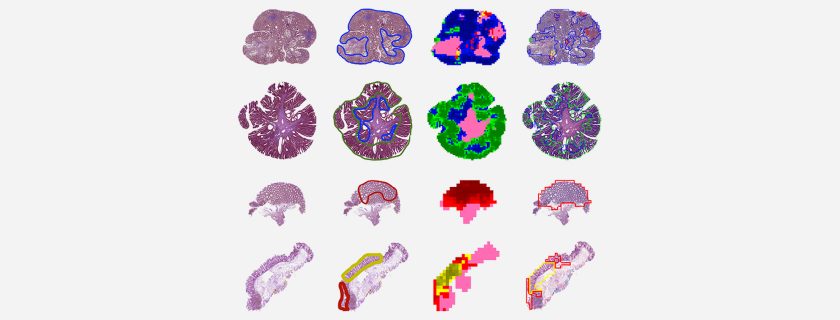
Dartmouth researchers have created an AI model to classify colorectal polyps on histology slides. Evaluation using 238 slides from 24 institutions across 13 US states finds that the model performs as well as practicing pathologists.
Researchers Discover a Key to the Survival of Dormant Breast Cancer Cells
A common anti-diabetes drug being tested in many clinical trials as an anti-cancer agent activated fat metabolism that promoted the survival of dormant breast cancer cells, suggesting that the drug has context-dependent effects on cancer cells.
New Mechanism May Safely Prevent and Reverse Obesity
Researchers at Dartmouth’s and Dartmouth-Hitchcock’s Norris Cotton Cancer Center have discovered that a receptor found in almost all cells plays a big role in the body’s metabolism. By blocking the receptor with use of a drug, mice on a high-fat diet did not become any fatter than mice on a low-fat control diet, and obese mice dropped in weight with use of the same drug. No ill side effects were observed in either study.