Read article – Cites a statistic from a Dartmouth Institute for Health Policy and Clinical Practice study that found that up to 30 percent of Medicare clinical care spending is “unnecessary or harmful and could be avoided without worsening health outcomes.”
Articles by: Geisel Communications
Geisel Alumni Awards: Call for Nominations
Calling all nominations! Do you have a former student, colleague or mentor to nominate for an Alumni Award? The deadline is September 15th!

Grant Writing Seminar
Dartmouth GrantGPS (Grant Proposal Support) invites you to attend the Write Winning NIH Proposals seminar on Friday, Dec. 15.
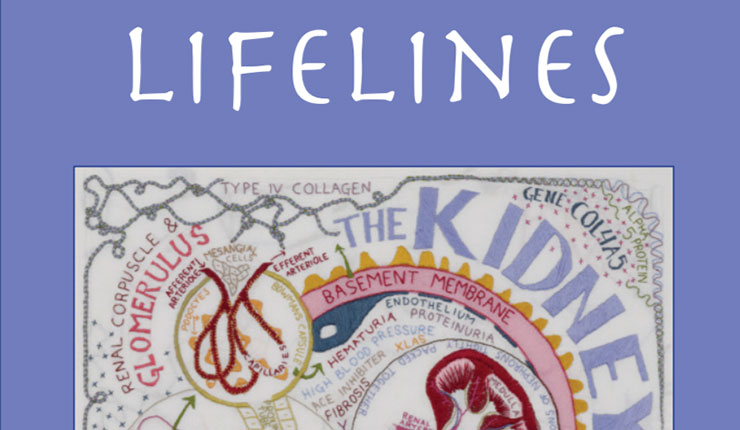
Lifelines: Call for Submissions
Do you have a poem, an art piece, or a short story about medicine you would like to share? If you’d like to see your work published, submit it to Lifelines, the official literary magazine of Geisel School of Medicine at Dartmouth!
New Study Offers Support for Prostate Testing – The New York Times
Read article – Quotes H. Gilbert Welch, professor of medicine and of the Dartmouth Institute for Health Policy and Clinical Practice, and professor of economics, about a new study that strengthens the evidence that testing can reduce deaths from prostate cancer. “I think the main message is that this is a choice,” says Welch, who says he believes very few men are helped by the test. Still, he said, “There’s no single right answer to this one.”
Patients Often Record Doctor’s Visits to Share Information With Caregivers – Clinical Pain Advisor
Read article – Features research conducted by Glyn Elwyn, professor and senior scientist at the Dartmouth Institute for Health Policy and Clinical Practice, about how patients may be recording office visits, with or without permission.
Why Medicare and Medicaid Can Outmatch Private Plans on Cost – The New York Times
Read article – Quotes Carrie Colla, associate professor of the Dartmouth Institute for Health Policy and Clinical Practice, about a study she led that suggests that private healthcare plans do not perform better. “What kind of insurance you have does affect your access to health care,” says Colla. “But once you’re in front of the doctor, by and large you’re treated the same way as any other patient.”
Stop Telling People They’re Fighters Who Will ‘Beat’ Their Unsurvivable Disease – USA Today
Read article – An opinion piece by Kathryn Kirkland, professor of medicine and of the Dartmouth Institute for Health Policy and Clinical Practice, in which she discusses how metaphors invoking war, battle and the fighting spirit are commonly used in response to diagnoses of cancer, but that there is an unintended effect of assuming that fighters should battle against the disease: the missed opportunities to fight for things that are most important — and achievable. Those would include time with family, completion of estate planning, restoration of relationships, and even bucket lists.
Genetic Tests Are Everywhere, But How Reliable Are They? – The Boston Globe
Read article – Quotes H. Gilbert Welch, professor of medicine and of the Dartmouth Institute for Health Policy and Clinical Practice, and professor of economics, about the overuse of genetic tests. “In some ways it’s easy for us to try and find something definitive and act on that even though it has nothing to do with what is wrong with the patient,” says Welch. “Genetics is an amazing tool. . . but to what extent does that data predict something that you care about? Is it useful knowledge?”

Save the Date – Leading Voices in Medical Education Grand Rounds on November 30
Greg Ogrinc, MD, MS, Interim Senior Associate Dean for Medical Education, invites you to attend the next Leading Voices in Medical Education Grand Rounds on Thursday Nov. 30 from noon to 1:30 PM in Auditorium G at DHMC. Margaret Chisolm, MD, Vice Chair for Education, Psychiatry and Behavioral Sciences at Johns Hopkins School of Medicine will present on social media in medical education.