Read article – Features an interview with H. Gilbert Welch, professor of medicine and of the Dartmouth Institute for Health Policy and Clinical Practice, and professor of economics and adjunct professor of business administration; about a study he conducted with Elliott Fisher, director of the Dartmouth Institute for Health Policy and Clinical Practice, and professor of medicine and of community and family medicine; that found wealthy Americans are more likely to be diagnosed with some types of cancer than poor people.
Articles by: Geisel Communications
Geisel Joins Coast-to-Coast Collaboration of Medical Schools to Transform Medical Education
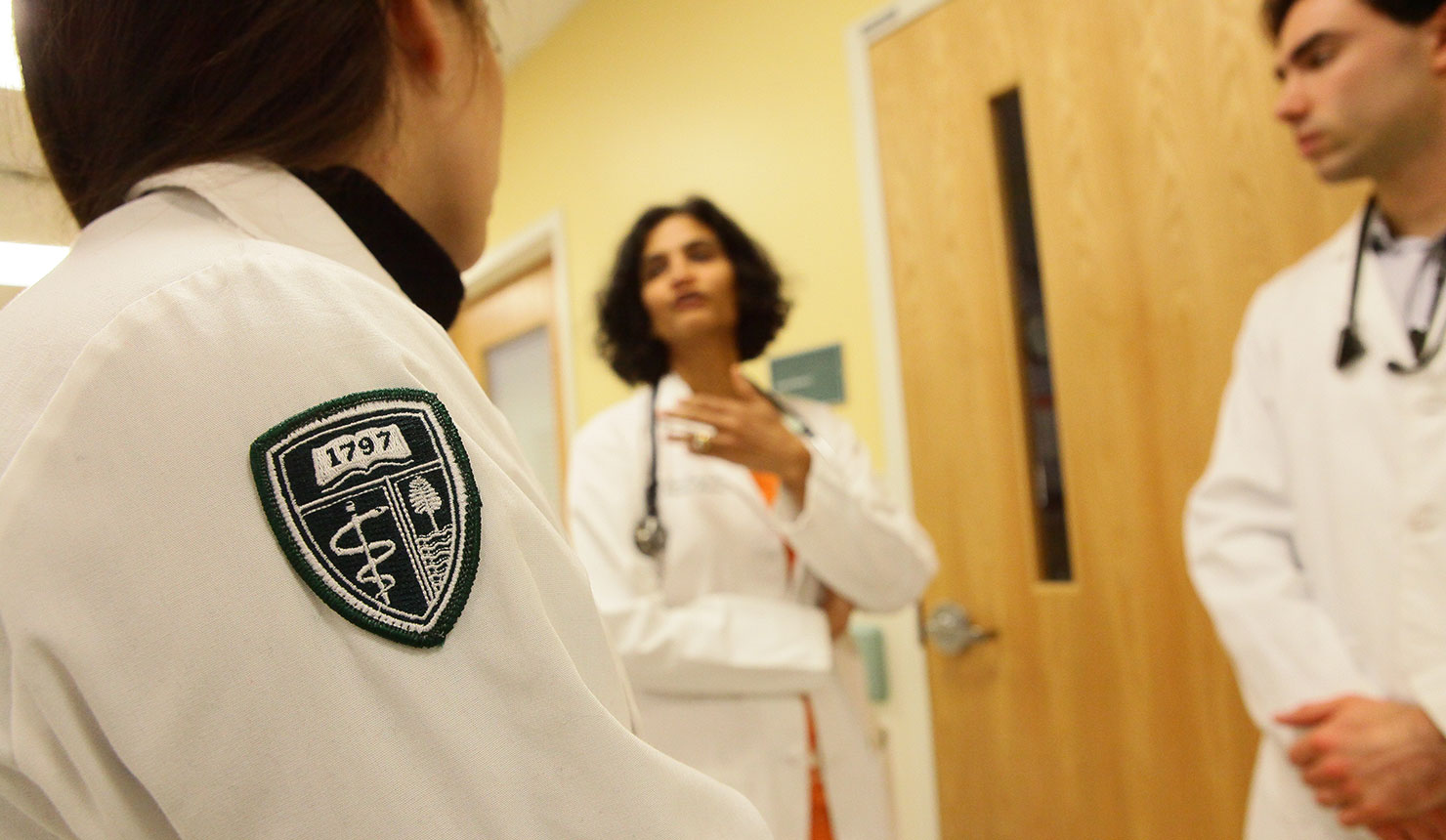
The Geisel School of Medicine has been chosen to be a part of the newly-formed Robert D. and Patricia E. Kern Institute for the Transformation of Medical Education, a national initiative to transform medical education across the continuum from pre-medical school to physician practice.
More Cancers Caught in Wealthy People – U.S. News & World Report via HealthDay News
Read article – Quotes H. Gilbert Welch, professor of medicine and of the Dartmouth Institute for Health Policy and Clinical Practice, and professor of economics and adjunct professor of business administration; and Elliott Fisher, director of the Dartmouth Institute for Health Policy and Clinical Practice, and professor of medicine and of community and family medicine; about new research they conducted that found wealthy Americans are more likely to be diagnosed with some types of cancer than poor people.
How to Tell if You’re Too Sick to Get on a Flight – The Huffington Post
Read article – Quotes Timothy Lahey, associate professor of medicine, microbiology and immunology, and of the Dartmouth Institute for Health Policy and Clinical Practice, about how flu symptoms are a good reason to forgo traveling. “There are some viruses that just go like wildfire through close quarters,” says Lahey.
Some Small Tumors in Breasts May Not Be So Bad After All – NPR
Read article – Quotes H. Gilbert Welch, professor of medicine and of the Dartmouth Institute for Health Policy and Clinical Practice, and professor of economics and adjunct professor of business administration, about a new study that concluded a significant proportion of tumors detected through mammography are small because they are biologically prone to slow growth. It appears that “screening disproportionately finds good cancers — cancers that may be better off not found,” says Welch, who was not involved in the study. “I think that we all need to realize that we’ve probably oversold the idea that looking for cancer early is the best way to avoid it.”
How Countries Around the World Try to Encourage Vaccination – CNN
Read article – Quotes Timothy Lahey, associate professor of medicine, microbiology and immunology, and of the Dartmouth Institute for Health Policy and Clinical Practice, in an article about new legislation in Germany that will make it mandatory for all kindergartens to notify the German health authority if parents haven’t submitted proof of vaccination counseling for their children.
Top Fed Blames Health Care Industry for NH’s Second Highest OD Deaths in Nation – New Hampshire Union Leader
Read article – Continued coverage of a recent conference hosted at Dartmouth titled “Tackling the New Hampshire Opioid Crisis: Harnessing the Power of Science to Break the Cycle” to address the country’s opioid epidemic. The conference featured speakers such as U.S. Rep. Annie Kuster DC’78 and Nora Volkow, director of the U.S. National Institute on Drug Abuse, as well as a presentation by Lisa Marsch, director of the Center for Technology and Behavioral Health (CTBH) and professor of psychiatry and of the Dartmouth Institute for Health Policy and Clinical Practice. Marsch presented on CTBH’s findings from a study that examined the social, medical, economic, and political factors that have given rise to the disproportionately high rate of opioid overdoses in New Hampshire.
Skin Cancer: The Latest Research, News, and Advice – NHPR
Read article – As a guest on “The Exchange,” Mary Jo Turk, associate professor of microbiology and immunology, discusses why Granite Staters are highly vulnerable to skin cancer, and why there’s cause for optimism, particularly when it comes to prevention and immunotherapy.
At Dartmouth Forum, Speakers Get Glimpse Into the Worlds of Opioid Users and First Responders – Valley News
Read article – A feature story about how researchers, health care providers, first responders and U.S. Rep. Annie Kuster ’78, gathered at Dartmouth to discuss ways to reduce opioid misuse and opioid-related deaths. The gathering highlighted a new HotSpot Report of opioid overdoses in the Granite State led by Lisa Marsch, director of the Center for Technology and Behavioral Health and professor of psychiatry and of the Dartmouth Institute for Health Policy and Clinical Practice.
Rep. Annie Kuster, Health Professionals Discuss Tackling the Opioid Crisis – NBC 5
Read article – Features comments by Lisa Marsch, director of the Center for Technology and Behavioral Health (CTBH) and professor of psychiatry and of the Dartmouth Institute for Health Policy and Clinical Practice, and U.S. Rep. Annie Kuster ’78, in a segment about a panel discussion at Dartmouth titled “Tackling the New Hampshire Opioid Crisis: Harnessing the Power of Science to Break the Cycle,” which focused on developing innovative solutions to tackle the opioid crisis.