Healthline – This article discusses a book by Dennis McCullough, associate professor of community and family medicine, titled My Mother, Your Mother on the topic of caring for aging loved ones.
Articles by: Geisel Communications
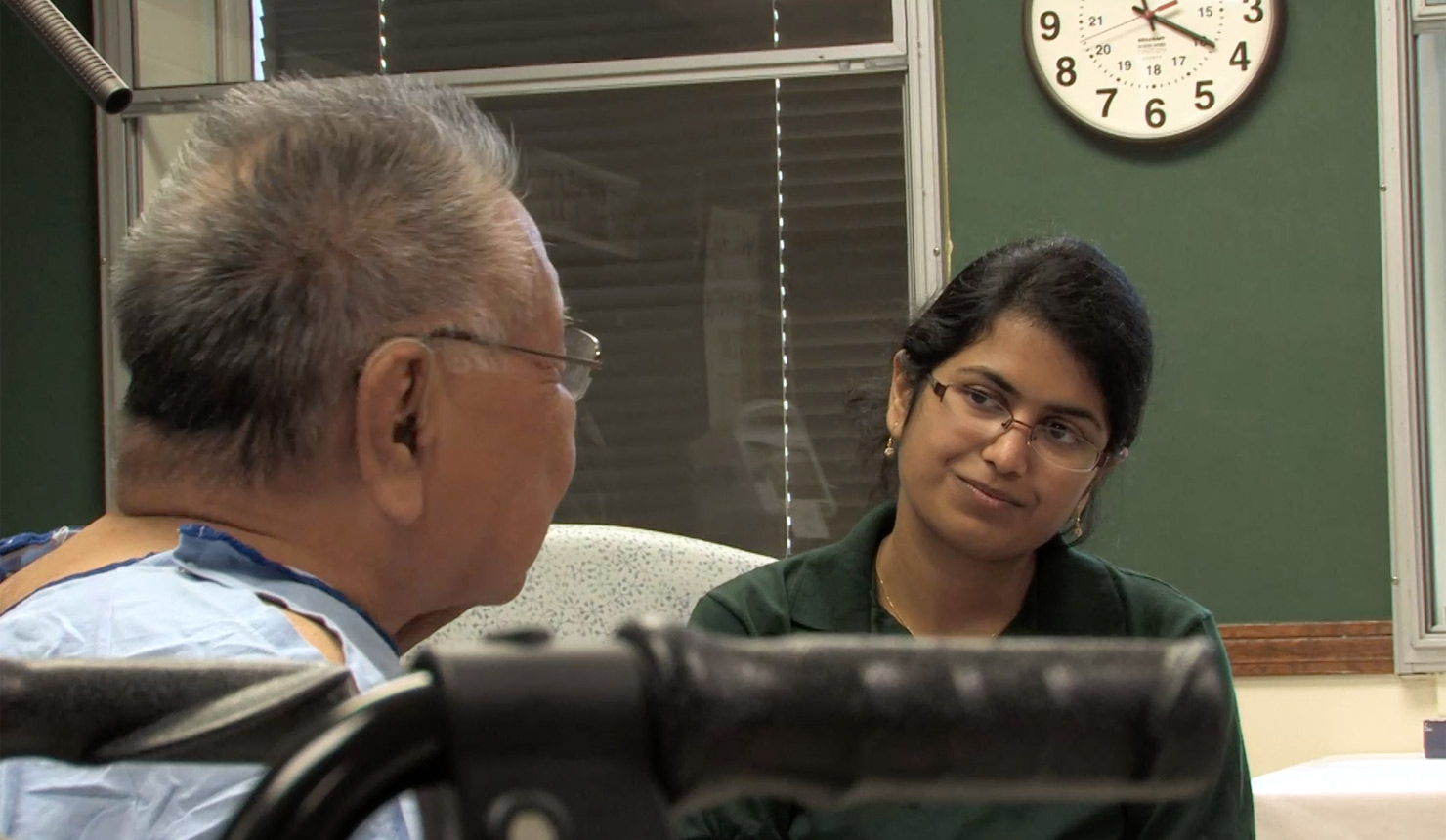
Dartmouth Ears Program: Learning to Listen
Students at the Geisel School of Medicine at Dartmouth are often seeking out ways to become involved in programs that allow them to customize their education and express creativity. Though the programs are not always directly connected to medicine, the overall goal is always to educate them on the best way to serve the communities they’ll be entering as physicians and scientists.
You May Not Have to Drink That Nasty Liquid Before Your Colonoscopy
The Washington Post – This story quotes L. Campbell Levy, assistant professor of medicine, about the common unfavorable pre-colonoscopy procedures, and reports that Levy and a team of Geisel researchers have developed an alternative preparation method, consisting of a diet-laxative combination, presented this week at the Digestive Disease Week conference.

Geisel Student Sends Appeal From Kathmandu
Dartmouth for Nepal committee member says low-cost shelters serve an urgent need.
At Dartmouth, Med Students Make Time for Serious Dance
VPR – A feature on Dartmouth’s dance ensemble, which will present a program featuring 16 dancers from within the Dartmouth community, including four from the Geisel School of Medicine, next weekend.
Disrupting Medical Education
Pacific Standard – In this opinion piece, Leslie Fall, professor of pediatrics, discusses the high costs of medical education and the need for reform.
Is Social Security in Worse Shape than We Think?
The Wall Street Journal – Continued coverage on a Harvard-Dartmouth study coauthored by Samir Soneji, assistant professor of the Dartmouth Institute for Health Policy and Clinical Practice, which asserts that forecasting errors within the Social Security Administration, tied primarily to life-expectancy data, have significantly overstated the financial health of the benefits program.
Social Security May Be in Worse Shape Than We Thought: Study
NBC News – Points to research co-authored by Samir Soneji, assistant professor of the Dartmouth Institute for Health Policy and Clinical Practice, and Gary King, director of Harvard’s Institute for Quantitative Social Science, which found that Social Security Administration have been consistently overstating the financial health of the program’s trust funds since 2000.
Patients Press the ‘Record’ Button, Making Doctors Squirm
The Washington Post – Glyn Elwyn, professor and senior scientist at the Dartmouth Center for Health Care Delivery Science and the Dartmouth Institute for Health Policy and Clinical Practice, comments on physicians’ reactions to patients recording their visits, and doctors’ concerns that recordings could be used against them.
Harvard Study: Social Security in Far Worse Shape than Official Numbers Show
Forbes – Points to research by scholars at the Dartmouth Institute for Health Policy & Clinical Practice and Harvard, which showed that over the last 15 years, the Social Security Administration’s Office of the Chief Actuary has consistently underestimated retirees’ life expectancy and made other errors that make the finances of the retirement system look significantly better than they are.