Listen to story – As a guest on “The Exchange,” William Torrey, professor of psychiatry and of the Dartmouth Institute for Health Policy and Clinical Practice, discusses how state leaders recently joined the medical and mental health community to launch “Change Direction NH,” part of a national initiative to raise awareness of mental health disorders and eliminate the stigma around these issues.
Archive for 2016
Check the Science: Being Trans Is Not a ‘Choice’ – Ozy
Read article – An opinion piece by Leslie Henderson, senior associate dean for academic affairs and associate dean for diversity and inclusion, and professor of physiology and neurobiology and of biochemistry, about how the countersuits being brought by the federal government and states such as North Carolina over the use of bathrooms by transgender individuals highlight a critical, common and incredibly damaging misperception: that gender and biology are two separate things.
Dartmouth Study Offers Hope for Babies Exposed to Drugs in Womb – New Hampshire Union Leader
Read article – Quotes Allison Holmes, associate professor of pediatrics, community and family medicine, and of the Dartmouth Institute for Health Policy and Clinical Practice, about her recent research on babies born with neonatal abstinence syndrome (NAS) as a result of their mother’s opiate use.
Yes, Rice Has Arsenic, But Here’s Why You Don’t Need to Panic – Haaretz
Read article – Diane Gilbert-Diamond, assistant professor of epidemiology and community and family medicine, is quoted about a recent study she led with other Dartmouth researchers about how prenatal exposure to arsenic harms the health of infants.
The Link Between Work and Mental Health – The Huffington Post
Read article – Cites Geisel research that found that individuals with a serious mental illness, who maintained work with an average of 13.8 hours per week (5,060 hours per year), had lower mental health care costs than those who were unemployed or not steadily employed. Over the study’s 10 years, individuals who maintained steady employment had mental health medical costs that were $166,350 less per person than the group that was unable to maintain consistent employment.
Do Doctors Really Die Differently Than the Rest of Us? – Pacific Standard
Read article – Cites research from the Dartmouth Atlas of Health Care, which found that someone living in Orlando, Fla., is more than twice as likely to receive aggressive end-of-life treatment than someone in Grand Junction, Colo.
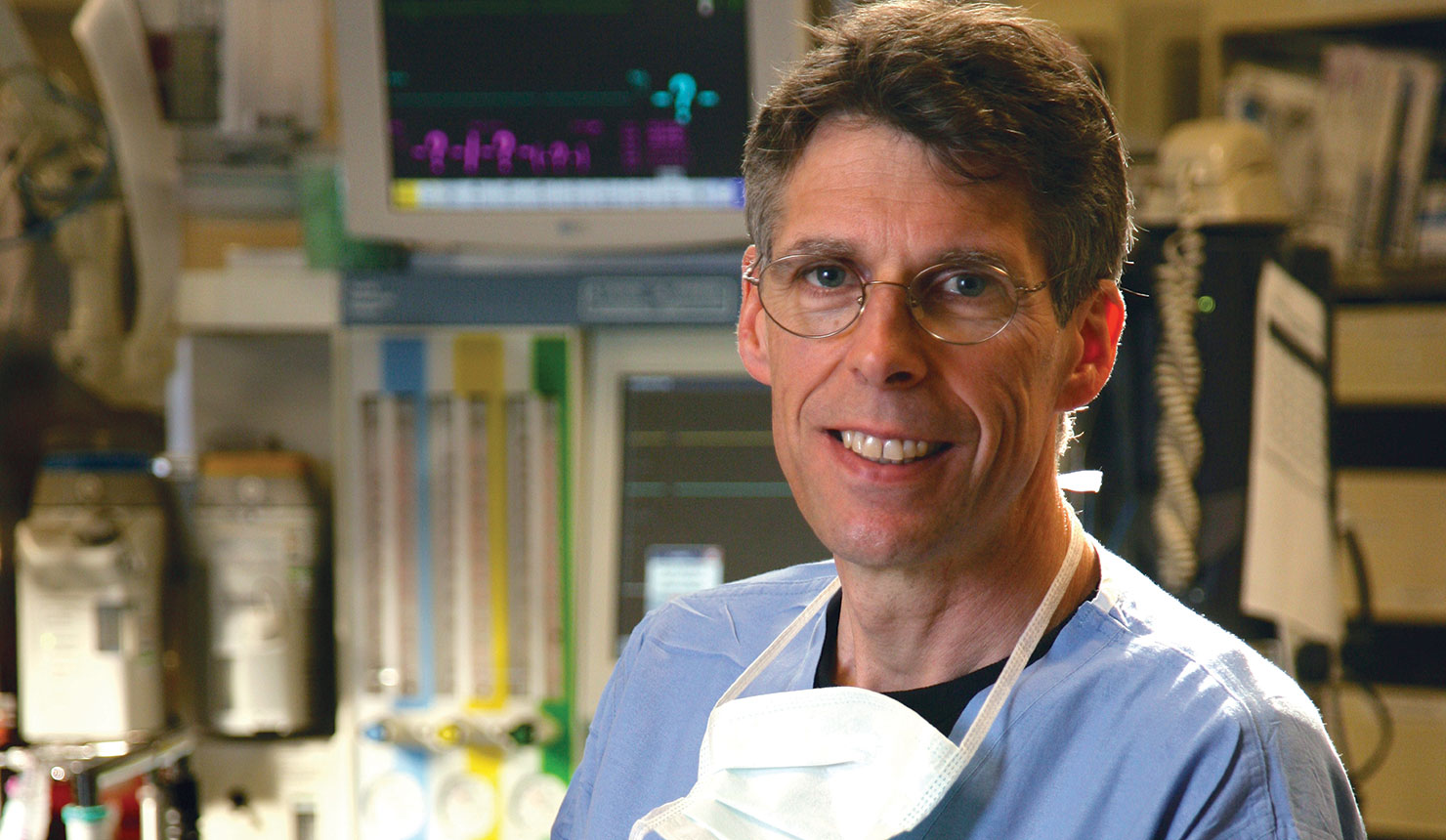
In Pursuit of Dual Passions
Glenn Rennels’s colleagues thought it was “a lunatic move” when, in 1990, he gave up an endowed chair at MIT to work in computer technology at The Permanente Medical Group (TPMG). But for Rennels (Med’80), this was the ideal way to unite his dual passions for medicine and artificial intelligence.
New Dartmouth-Hitchcock Research Helps Babies Born With Opiate Dependencies – VPR
Read article – Quotes Allison Holmes, associate professor of pediatrics, community and family medicine, and of the Dartmouth Institute for Health Policy and Clinical Practice, about her recent research on babies born with neonatal abstinence syndrome (NAS) as a result of their mother’s opiate use. Her study showed that a different method for neo-natal care can address infants’ symptoms more effectively. “Even using the same medication in different settings, the babies had very different lengths of stay,” says Holmes. “So looking that as a whole you think, ‘Maybe it’s not the medication that matters but more the environment of care.'”
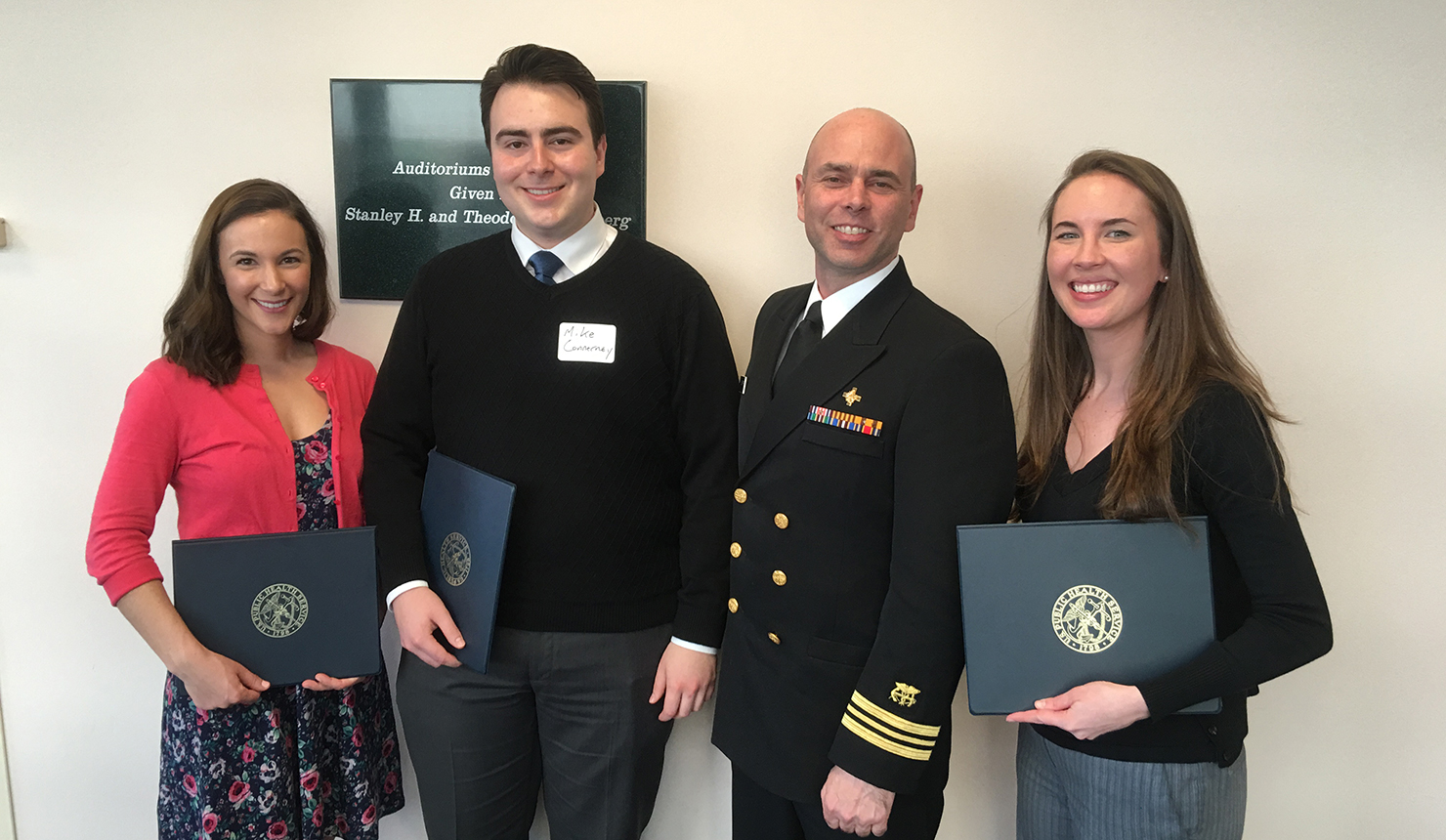
Geisel Medical Students Earn Public Health Award
Three rising third-year Geisel medical students have received a distinguished national public health award for their efforts over the past two years to improve both awareness of and access to health care for migrant farm workers in the Upper Valley.
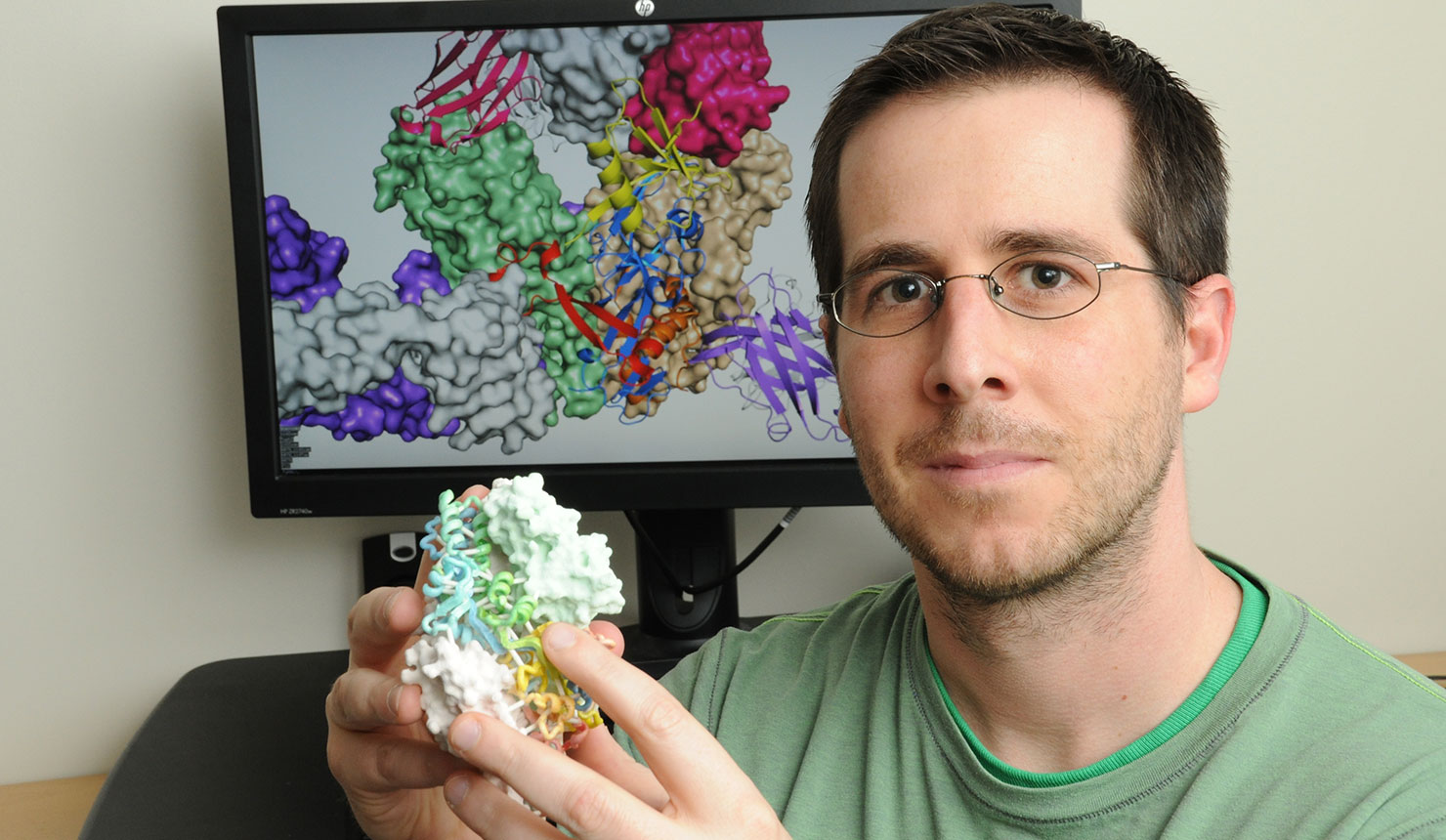
Function Follows Form – Revealing the Molecular Mechanisms of Viruses
Structural biologist Jason McLellan, PhD, an assistant professor of biochemistry at Geisel, is doing groundbreaking research on viral proteins that is providing new insights into deadly outbreaks such as Ebola and MERS-CoV.