Results from a Geisel School of Medicine study investigating whether following a planetary health style diet during pregnancy affects preterm birth and babies’ size at birth are published in the American Journal of Clinical Nutrition, “Adherence to the EAT-Lancet Planetary Health Diet during Pregnancy and Associations with Preterm Birth and Infant Size: a prospective analysis from the New Hampshire Birth Cohort.”
Post Tagged with: "nutrition"
Novel Scale Correlates Children’s Snacking Behaviors with External Food Cues
Preliminary evidence from a new national Dartmouth study suggests that external food cue responsiveness is measurable by parental report in preschool-age children. Responsiveness was greater among children with, versus without, usual TV advertisement exposure. These results may provide a better understanding of how an obesogenic food environment shapes the development of children’s eating behaviors at a young age.
Food as Medicine: Integrating Nutrition Education into the Medical Education Curriculum
In response to nutrition’s role in maintaining population health, and to improve nutrition education geared toward medical students, Geisel is among a handful of schools integrating evidence-based nutrition content across all four years of its curriculum.
Why This Doctor Dropped Everything to Go to Culinary School
Yahoo News – Features Julia Nordgren, MED ’99, who maintains a personal health and diet practice, consults with companies on how to keep employees healthy, and offers cooking classes in order to transform the way the medical field approaches healthy eating with patients, and educate people on how diet affects health.
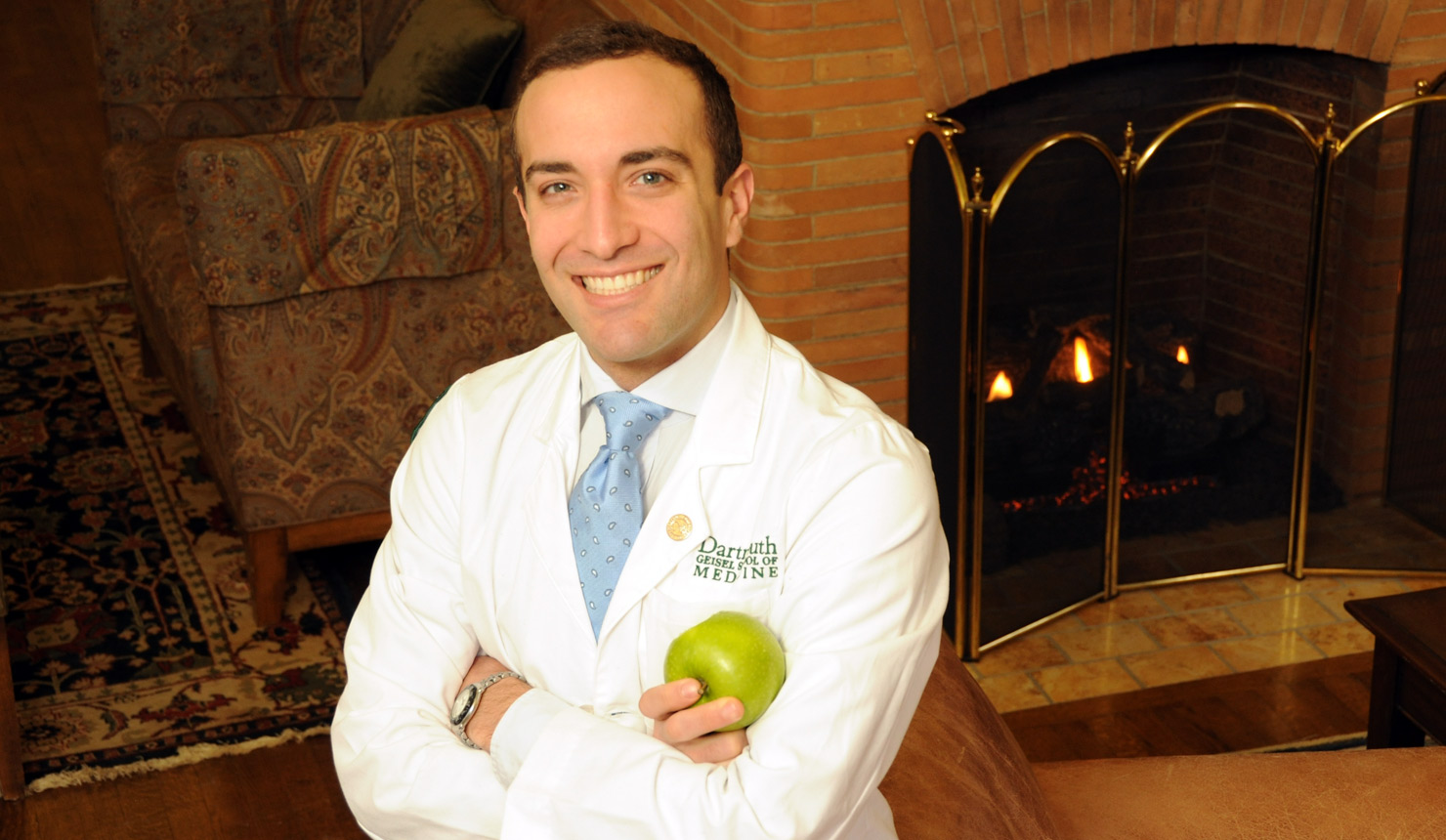
Student Profile – Ryan Olavarria: Health Crusader
First-year Geisel medical student Ryan Olavarria is dedicated to showing people that small behavioral changes leading to better health are easy to make.
Geisel Food Challenge Builds Compassion
How do you define compassion, how do you best teach it, and how do you practice it as a doctor-in-training? Khushboo Jhala (’16) has been exploring these questions through a project funded by the Schwartz Center for Compassionate Healthcare.