Angus Johnson
About Me
My name is Angus Johnson, and I'm a 6th year PhD Candidate in the Cramer Lab. I graduated from SUNY Binghamton with a BS in Biology in 2020. My thesis work focuses on identifying genetic mechanisms underlying increased fitness in low oxygen atmospheres. Utilizing experimental evolution, a previous lab member identified a unique colony morphology, H-MORPH, associated with increased fitness in low oxygen and increased virulence in murine models of invasive pulmonary aspergillosis. Subsequently, we identified an unannotated gene of unknown function, bafA, that was necessary and sufficient to induce H-MORPH. Interestingly, bafA is cargo on Starship transposons, a newly identified class of transposable element found in fungi. Utilizing convergent biochemical and genetic approaches, I've narrowed in on the asexual development pathway as the target of bafA. There are a plethora of open questions I'm still trying to understand.
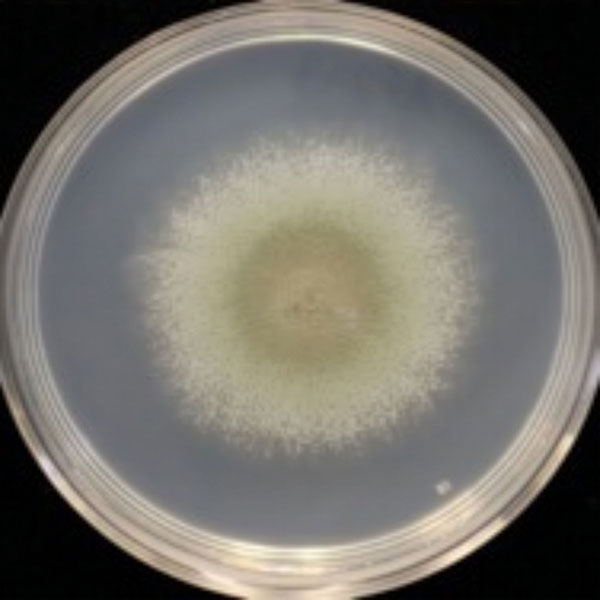
"Normal" Morphology
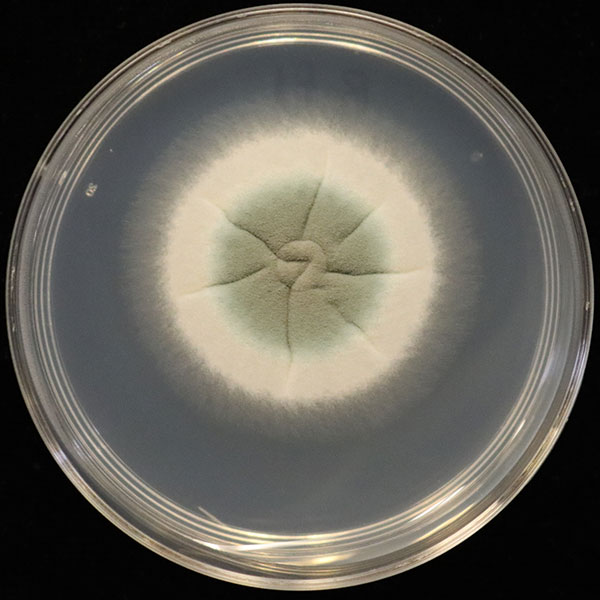
H-MORPH
First and foremost, why and how are asexual development pathways influencing low oxygen fitness? I believe the answer lies in metabolism. Moulds like A. fumigatus grow by tip extension rather than division. A. fumigatus separates its cellular compartments with septa. Across a hypha, there exists a spectrum of cells adopting physiologies to perform specific functions based on their environment and stimulus. For a growing cell at the hyphal tip, metabolism needs to properly promote anabolism to build the materials necessary for growth. However, the further away cells get from a growth front, the further they may be from nutrients. These non-growing compartments lack the same biosynthetic necessity that the growing cells have, and must appropriately respond to optimize their metabolic output. A. fumigatus also generates a specialized asexual reproductive structure called a conidiophore that helps it to spread conidia into the atmosphere to colonize new environments. I believe that the asexual development pathway modulates the metabolic flux required to properly support these unique states across a hypha.
Interestingly, A. fumigatus cell compartments are not completely separated- they possess a unique structure called a Woronin body that can open or close to mediate cell-to-cell cytoplasmic sharing. How might Woronin bodies regulate cell-to-cell communication and cooperation in an A. fumigatus hyphal network?
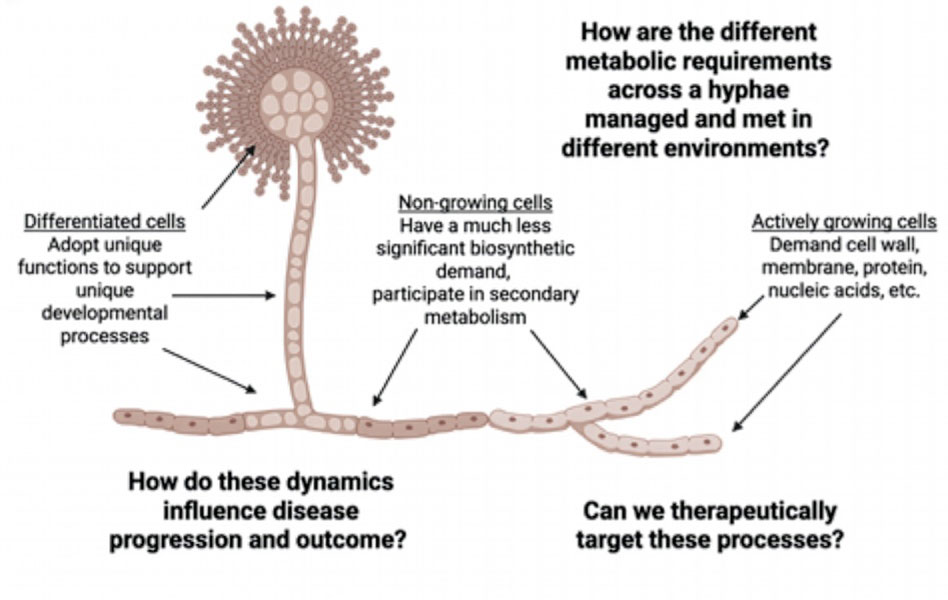
As part of my funded F31 proposal, I hope to define the unique metabolism of H-MORPH using metabolic flux analysis in collaboration with the Liao Lab just down the hall. Many of the asexual development regulation systems under bafA control are the same systems frequently mutated in cancer. This, in combination with other preliminary data, led me to the hypothesis that H-MORPH strains eschew respiration and adopt aerobic glycolysis to support rapid proliferative growth. Did fungi evolve new genes on mobile DNA to promote a cancer-like metabolic state?
I am also working on a side project in collaboration with Dr. Eric Van Dang to make the immunologically important gut commensal fungus Wallemia mellicola genetically tractable. We have optimized growth and protoplasting, and have successfully integrated a drug selection marker into the genome. Establishing genetic methods in this mould will allow the Van Dang lab to better dissect how W. mellicola regulates gut immunity.