The Department of Biomedical Data Science invites you to attend a seminar in person on Wednesday, July 15 from 2:30-3:30pm at DHMC, Auditorium H with with Jonathan Garlick, DDS, PhD, Professor and Director, Division of Cancer Biology & Tissue Engineering, Tufts School of Dental Medicine. Human, 3D engineered tissues address fundamental limitations of monolayer culture, where cells lose the phenotypic diversity that drives disease biology in vivo. This talk outlines universal principles of 3D tissue fabrication that can be applied broadly to increase tissue complexity and better recapitulate in vivo biological responses. These principles will be illustrated using human 3D skin equivalents—air-liquid interface cultures grown on fibroblast-populated connective tissue matrices—as a model for architecturally accurate, translational disease modeling. By applying these principles, we aim to improve in vitro–in vivo correlation for pre-clinical drug screening and therapeutic development.
“The Principles and Practice of 3D Tissue Biology”
Wednesday, July 15 from 2:30-3:30pm ET
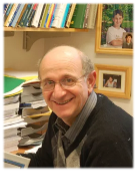
Professor and Director
Division of Cancer Biology & Tissue Engineering
Tufts Schools of Dental Medicine, Medicine, and Engineering
Founder and Director, The Civic Science Collective
The presentation will take place both in person at DHMC, Auditorium H (and via Zoom).
Please write to biomedical.data.science@dartmouth.edu to request the Zoom login details.
Dr. Jonathan Garlick’s lab research is focused on developing new treatments for chronic diseases, including oral and skin cancer, scleroderma, and complications of diabetes. He has developed 3D tissues as disease models to accelerate the discovery and testing of new drugs. Dr. Garlick established and leads the Civic Science Collective that creates a more inclusive climate for public participation in science by fostering equitable and trustworthy relationships between scientists and the communities research hopes to serve. Dr. Garlick’s Dialogue Center brings people together in conversation so they can connect more productively across different worldviews, identities, power dynamics, and “cultures” of science. He teaches dialogue-based, Civic Science courses where students discover how they can gain the skills they need to create a more inclusive and welcoming climate for participation in science.