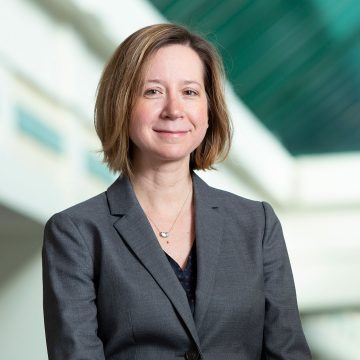
Mary Jo Turk, PhD
Title(s)
Professor of Microbiology and Immunology
Additional Titles/Positions/Affiliations
O. Ross McIntyre, M.D. Endowed Professor
Co-Director, Immunology and Cancer Immunotherapy Program
Norris-Cotton Cancer Center
Department(s)
Microbiology and Immunology
Education
Dr. Turk received her B.S. from John Carroll University, and her Ph.D. from Purdue University. She conducted postdoctoral work at the Memorial Sloan-Kettering Cancer Center. Dr. Turk joined the faculty of Dartmouth in 2004.
Programs
Immunology Program
Molecular and Cellular Biology Graduate Programs
Dartmouth Cancer Center
Websites
https:
https:
https:
Academic Analytics
View Profile
Contact Information
One Medical Center Drive
Rubin Building 732, HB 7937
Lebanon NH 03756
Office: Rubin 732
Phone: 603-653-3549
Email: mary.jo.turk@dartmouth.edu
Asst. Phone: 603-653-9952
Professional Interests
Tumor Immunology and T cell memory
Our laboratory's research focuses on generating durable memory T cell responses to cancer. What is known about generating immunological memory has historically derived from studies of infectious pathogens. Because tumors are an altered form of self-tissue, memory T cell responses to tumors have been characteristically difficult to generate, and mechanisms for their maintenance have not been well understood.
Our laboratory has established that autoimmune disease is a critical determinant for the maintenance of T cell memory to tumor antigens. We have also shown that the most functional tumor-specific memory T cells reside in peripheral tissues. Our research has established that tissue-resident memory T cells are a critical component of long-lived immunity to cancer.
Courses Taught
Bio 42
Micro/Immuno 136
TimiGP: Inferring cell-cell interactions and prognostic associations in the tumor immune microenvironment through gene pairs. Th1-like Treg cells are dressed to suppress anti-tumor immunity. The Effect of Lung Resection for NSCLC on Circulating Immune Cells: A Pilot Study. In the right place at the right time: tissue-resident memory T cells in immunity to cancer. Resident memory CD8(+) T cells in regional lymph nodes mediate immunity to metastatic melanoma. Dendritic cells maintain anti-tumor immunity by positioning CD8 skin-resident memory T cells. Resident and circulating memory T cells persist for years in melanoma patients with durable responses to immunotherapy. Memory CD8(+) T cell responses to cancer. Oncogenes Feed Treg Cells without Calling CD8s to the Table. Anti-CTLA-4 Activates Intratumoral NK Cells and Combined with IL15/IL15Rα Complexes Enhances Tumor Control. |
|